Throughout the year, I’ve watched almost every week bring the launch of a new AI model or software. And every time, some Instagram content creator would claim that if you were learning a particular skill, the latest AI model had already taken your job before you even got the chance to land one.
Week after week, another piece of negative news came along, accompanied by a growing sense of anger, frustration, and sadness. Amid all this, when I heard about the release of Project Hail Mary, I decided to watch the movie with friends at the Cue Cinema.
However, I'll share my personal opinion on the movie, and I'll also share experts' thoughts as well.
What is Project Hail Mary About?
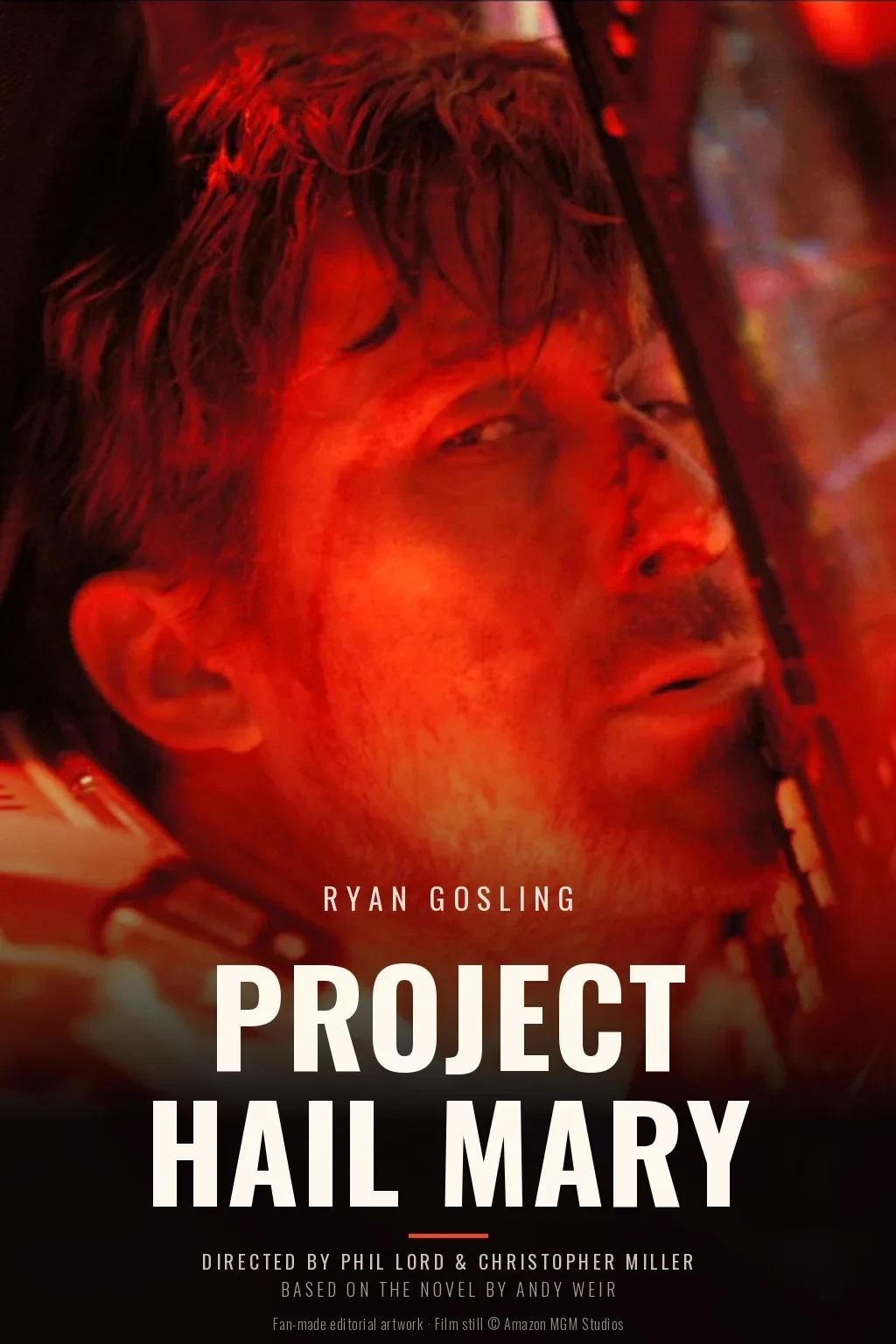
Project Hail Mary (2026) is about a science teacher, Ryland Grace, who was sent into outer space on a mission that comes with ups and downs.
At the start, he wakes aboard a spacecraft without knowing who he is or why he’s there. As his memory returns, he discovers that he’s been sent to investigate a substance threatening the sun. Saving Earth depends on his scientific knowledge, and on an unexpected friendship far from home.
That is the setup rather than a summary of the film’s later surprises. Ryan Gosling plays Grace; Phil Lord and Christopher Miller direct Drew Goddard’s adaptation of Andy Weir’s 2021 novel.
The useful distinction is between a mission story and a mystery story. Grace needs to understand the danger, but he also needs to understand his own place in it. Recovering memory gives the screenplay a reason to move between the spacecraft and events on Earth. You learn the assignment with him instead of receiving the whole briefing at once.
Is Project Hail Mary Worth Watching?
Yes, if you enjoy an approachable space adventure where cooperation matters as much as technical skill. I strongly recommend it, especially for its central friendship and large-scale visuals, as I found it entertaining too, but at some points, I feel that excessive joking weakens the fear and emotional weight.
Ryan Gosling's comic ability, an alien companion, ambitious space imagery, and a story with enormous stakes fill the gap between entertainment and visual spectacle.
That's why, if someone is choosing a night film that can be both entertaining and fairly visually spectacular, Project Hail Mary would be a good match. If your favorite part of a survival story is watching people become resourceful together, the recommendation is stronger.
If every joke in a crisis takes you out of the scene, approach with caution.
Was Ryan Gosling too Funny for the Movie?
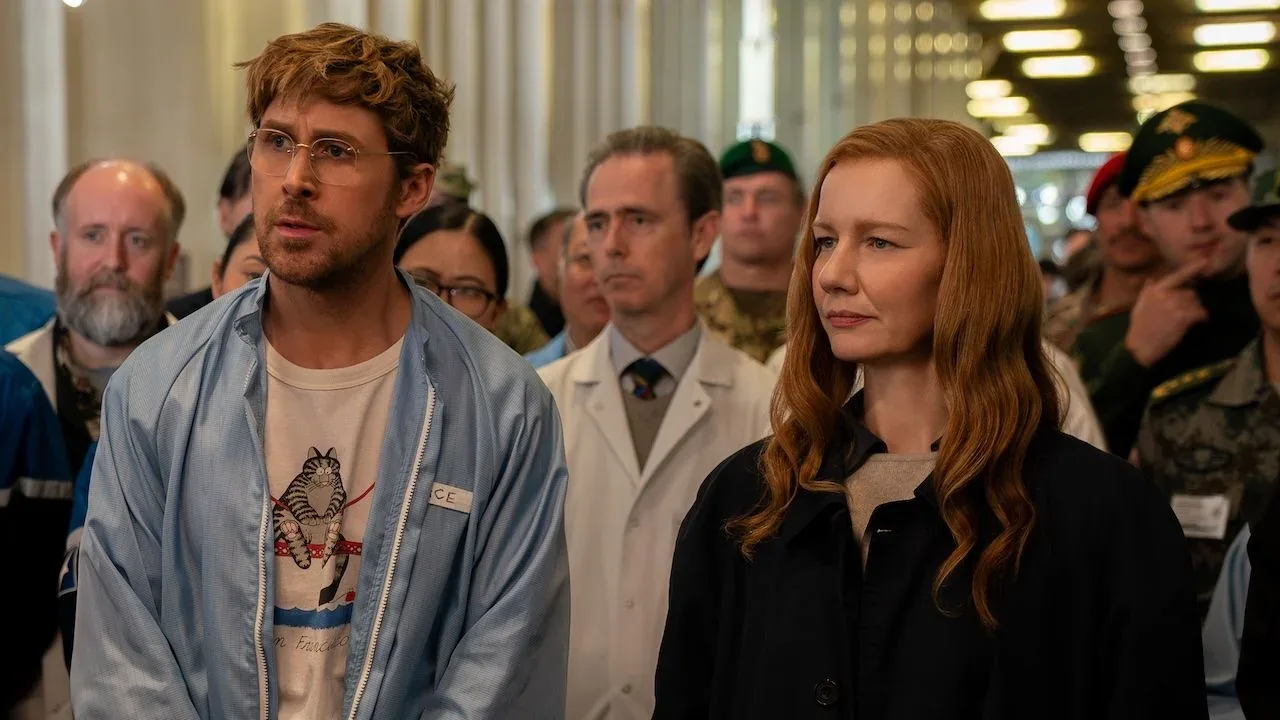
Gosling’s appeal here is a scientist who can look overwhelmed without becoming impossible to follow. Ebiri describes Grace as initially clumsy and out of his depth, and praises the actor’s deadpan comic ability. His criticism is that the screenplay gives that ability too much work to do: Grace talks and jokes when silence might let the situation register.
That’s a specific concern, not a complaint that serious films should never be funny. Humor can make someone facing catastrophe feel human. Constant humor can also spare the audience from experiencing the catastrophe’s weight. The question is whether Grace’s personality grows out of his fear or keeps covering it up.
Hüller offers a useful contrast. Ebiri singles out her dry performance as Eva Stratt, the authority figure organizing the mission. In a film sold partly on Gosling’s charm, a less accommodating presence matters. Not everyone in this emergency has the luxury of making it comfortable.
On that evidence, the performances seem a stronger reason to watch than the dialogue is. You can enjoy an actor’s timing while still wishing the script would occasionally leave him alone.
Rocky is the Real Reason this Mission Stands Out
The most persuasive case for Project Hail Mary is the relationship between Grace and Rocky. Hutchinson describes the film primarily as a buddy movie, with science providing the problems that bring its two isolated characters together. He particularly praises Rocky’s practical puppetry and the character’s friendly curiosity.

An alien companion can be a shortcut to easy affection. Here, the more interesting idea is that friendship requires work. Shared vocabulary has to be built. Different abilities have to become useful to one another. Cooperation is part of the survival mechanism, not simply a reward once the technical challenge is over.
Ebiri is less convinced by the execution. He finds Rocky’s voice and presentation overly cute, making an unfamiliar intelligence feel more like an endearing pet. That criticism identifies the risk precisely: making an alien lovable can make it less alien.
Neither response needs to cancel the other. The practical question is whether you want first contact to feel comforting or strange. This film’s reception suggests that comfort wins. For some viewers, that will be its best quality.
Direction, Story, and Pacing
Lord and Miller bring a comic sensibility to a premise that could have become relentlessly bleak. Hutchinson welcomes the hopeful tone and argues that the adaptation makes the right choice by giving the central friendship priority.
Ebiri thinks the film sometimes uses jokes to duck its own darker implications. The science is part of the same trade-off. According to Hutchinson, many challenges from the novel remain, but the explanation of how each solution works is reduced. That gives the relationship more room while asking readers of the book to accept a less detailed chain of reasoning.
A good way to approach the adaptation is to separate scientific interest from scientific completeness. The film can encourage curiosity without preserving every calculation. What matters dramatically is whether a discovery feels earned, rather than simply announced when the plot needs rescuing.
Pacing is the other dividing line. At 156 minutes, this is a substantial commitment. Ebiri calls it too long; Hutchinson says the length doesn’t feel burdensome. Viewers who connect with the partnership have more reason to enjoy spending that time. Those less charmed by it may notice the repeated jokes much sooner.
There are Visuals and Sound within Empty Space
Hutchinson describes a spacecraft interior full of physical switches, wires and controls. His account gives the setting a working-machine character rather than the blank polish of a futuristic showroom. For a story about making things function under pressure, that’s a sensible design choice: the environment offers tools, not just scenery.
Even the more skeptical Ebiri praises the film’s expansive colors and patterns in space. Agreement between otherwise different reviews makes visual scale one of the firmer recommendations. The science-fiction imagery appears to offer wonder that doesn’t depend entirely on whether every joke lands.
Sound deserves a practical warning rather than an invented assessment of individual music cues. Hutchinson reports a loud presentation and sudden scares. If you’re watching at home, clear dialogue matters, but you don’t need to turn the volume into a test of endurance. This review doesn’t claim a firsthand evaluation of the score or sound mix.
How Does Project Hail Mary Compare with The Martian?
The Martian is the obvious comparison because both films adapt Andy Weir novels, and both screenplays are by Drew Goddard. Like they both stress the difference: Project Hail Mary makes its central friendship the main attraction instead of feeling like a second version of the earlier film.
If this is what you want | How Project Hail Mary fits |
|---|---|
Science used to solve survival problems | A strong match, though the novel’s detailed explanations are shortened |
A self-contained adaptation | Hutchinson says it works for viewers who haven’t read the book |
A human connection inside a large space adventure | The Grace–Rocky partnership is the clearest selling point |
A cold, disturbing encounter with alien life | A weaker match; warmth and comedy are central |
Read the book afterward if the unanswered technical questions are what interest you most. There’s no need to turn that into homework before watching. A screen adaptation should be allowed to choose a different balance, while still being judged on what that choice costs.
Parents’ guide: is it suitable for children?
The U.S. listing is PG-13 for thematic material and suggestive references. The BBFC’s detailed advice adds moderate threat, rude humor, drug references, and implied strong language. Friendly marketing shouldn’t be mistaken for a guarantee that the film is comfortable for every child.
Without describing plot turns, the content concerns include brief images of dead bodies, injury with some blood, bereavement and references to suicide. There are also tense spacecraft incidents. Children sensitive to separation or the idea of losing family may respond more strongly to the premise than the comic tone suggests.
The BBFC warns about flashing images that may affect viewers with photosensitive epilepsy. For younger viewers, the runtime is another consideration. An interested teenager may enjoy the scientific questions; a younger child can struggle with a long film even when individual scenes aren’t especially frightening.
Before You Go, Guys.
The strongest reason to choose Project Hail Mary is the promise of watching two isolated beings learn to help one another. The strongest reason to hesitate is its determination to keep that experience funny and reassuring. If hopeful, friendship-led science fiction is what you’re after, put it on the watchlist; don’t expect every frightening idea to be allowed to stay frightening.
Questions, Answered
Do I need to read the novel first?
No. Hutchinson’s Ars Technica review explicitly says the film works for people who haven’t read the book. Knowing the novel can add context to the shortened scientific explanations, but it isn’t a requirement.
Do you need a science background to follow it?
Not according to the adaptation described in the reviews cited here. Hutchinson notes that technical explanations are shortened in favor of the relationship. Viewers wanting the full reasoning will find more of it in the novel.
Does the title mean it’s a religious movie?
The mission’s name refers to a desperate long-shot attempt. Hutchinson’s review explains the name in that context. The film’s advertised story is a science-fiction rescue mission, not an adaptation of a religious text.
Is Project Hail Mary a sequel to The Martian?
No. It adapts a different Andy Weir novel, with a different lead character and mission. The connection is the author and screenwriter, not a continuing storyline.
Is Project Hail Mary based on a true story?
No. Amazon identifies it as an adaptation of Andy Weir’s 2021 science-fiction novel. Scientific ideas are part of the premise, but Grace’s mission is fictional.