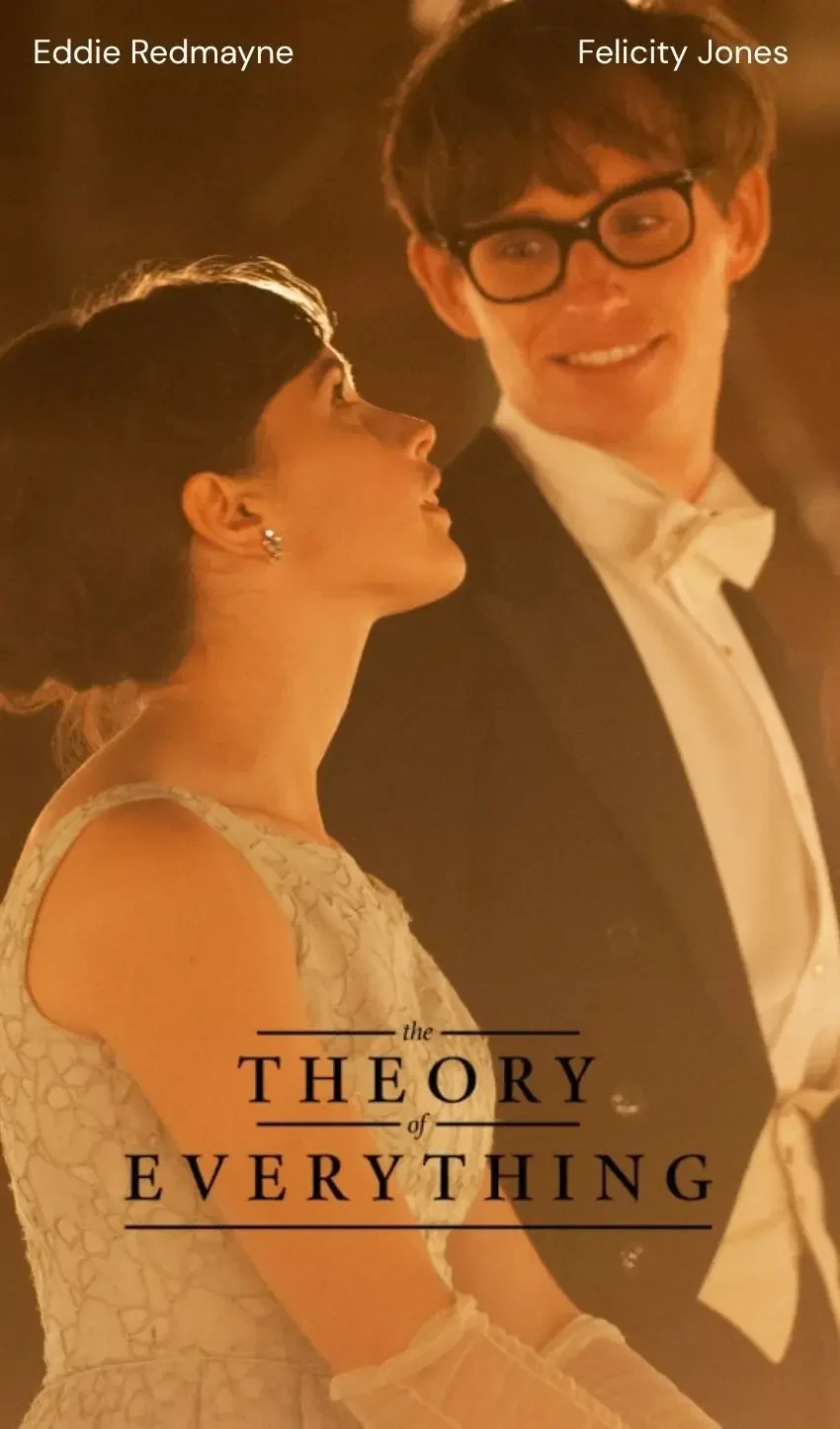
I watched The Theory of Everything expecting a polite British biopic about the genius in the wheelchair, but what I got was a love story that keeps asking the same brutal question: how much of yourself can you give before the giving becomes the only thing left of you?
James Marsh’s The Theory of Everything is not primarily about black holes or A Brief History of Time. It is about a marriage that starts in Cambridge sunlight and slowly, almost politely, collapses under the weight of a body that refuses to cooperate and a mind that refuses to stop.
Eddie Redmayne and Felicity Jones make that collapse feel specific, intimate, and strangely hopeful simultaneously. Let's discuss everything in detail.
What The Theory of Everything Is Actually About
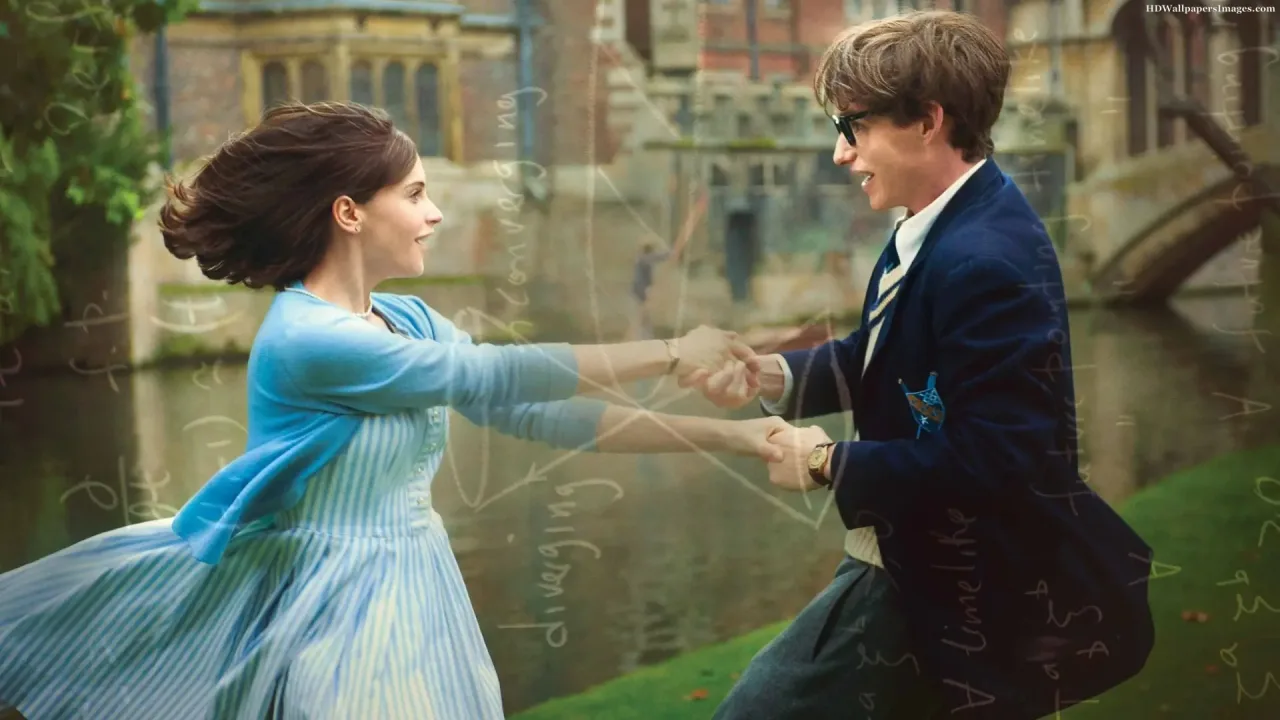
In the early 1960s, Stephen Hawking is a bright, slightly awkward cosmology student at Cambridge who still hasn’t settled on a thesis topic. He meets Jane Wilde, a literature student with clear eyes and a stubborn streak, at a party. They fall in love the way people do when they are young, and the future still feels negotiable.
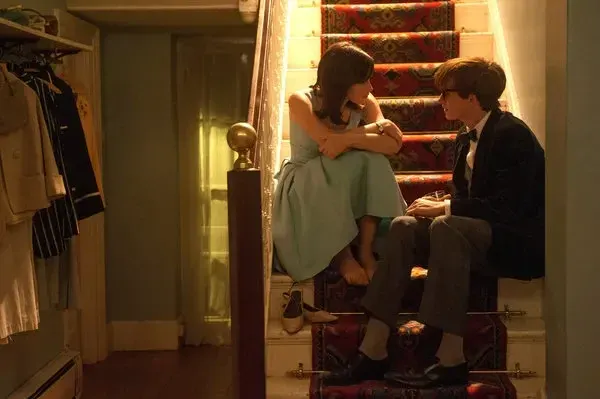
Then Stephen’s body starts betraying him. One day, he fell down at the university, and doctors diagnosed him with motor neuron disease. They give him only two years because they think the disease won't let him live long enough to do something big.
Jane decides to live the rest of his life with him. They marry, and they start a happy family. While Stephen keeps working on his thesis project and researches the sky and void with the title "Properties of Expanding Universes," the work becomes extraordinary.
However, the disease keeps taking pieces of him. The film follows roughly twenty-five years of that shared life, the slow tightening of the physical world and the expanding of the intellectual one, and the quiet ways a marriage can stretch until it either holds or doesn’t.
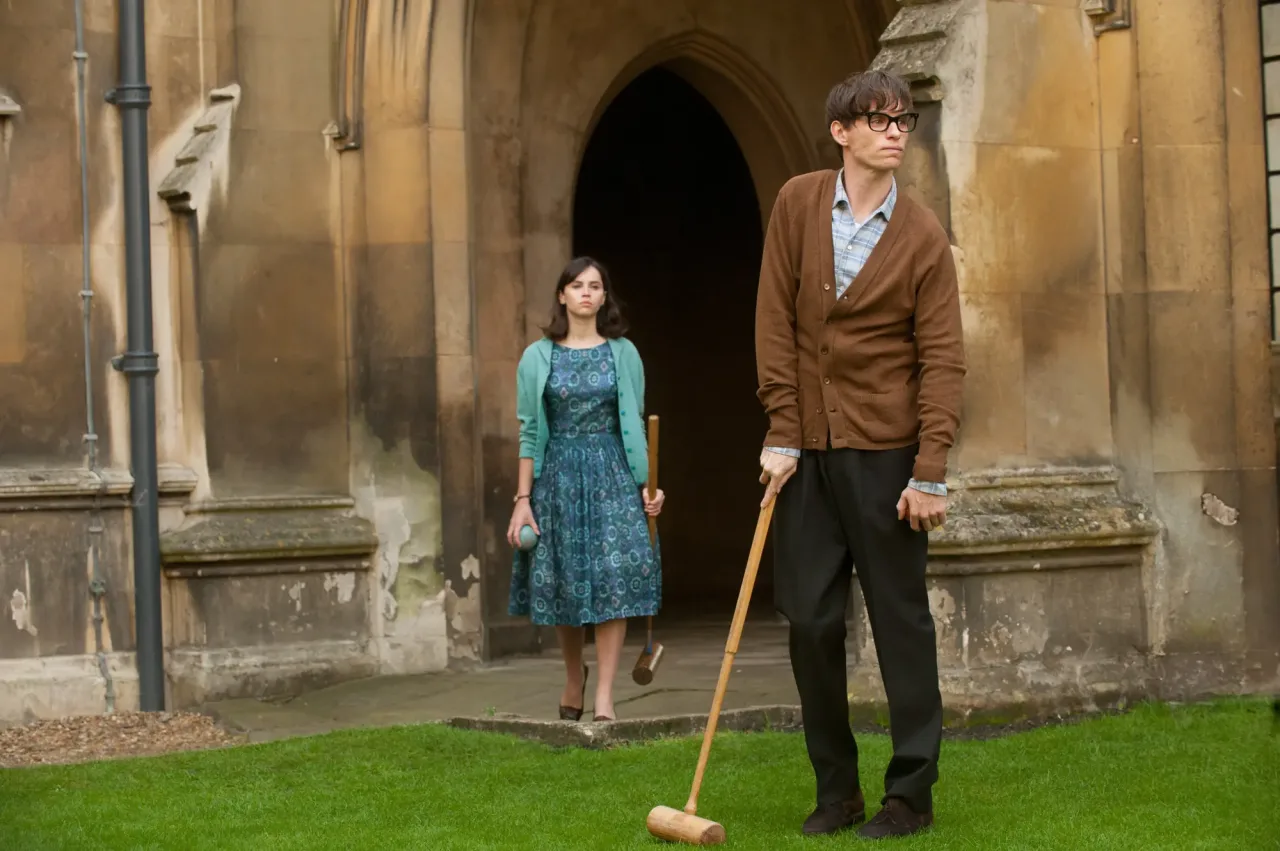
It is adapted from Jane Hawking’s memoir, and you feel that perspective in the framing. This is not the story of the world’s most famous living scientist told from the outside. It is the story of the woman who stood next to him while the world decided what he meant.
The Performances That Carry Everything
Eddie Redmayne’s work here is the kind of physical transformation that wins awards for a reason. He starts as a lanky, slightly awkward young man with a crooked smile and a restless mind. Over the course of the film, his body contracts, his posture collapses, his speech becomes a struggle, and eventually the only reliable communication left is the computer voice the world came to know.
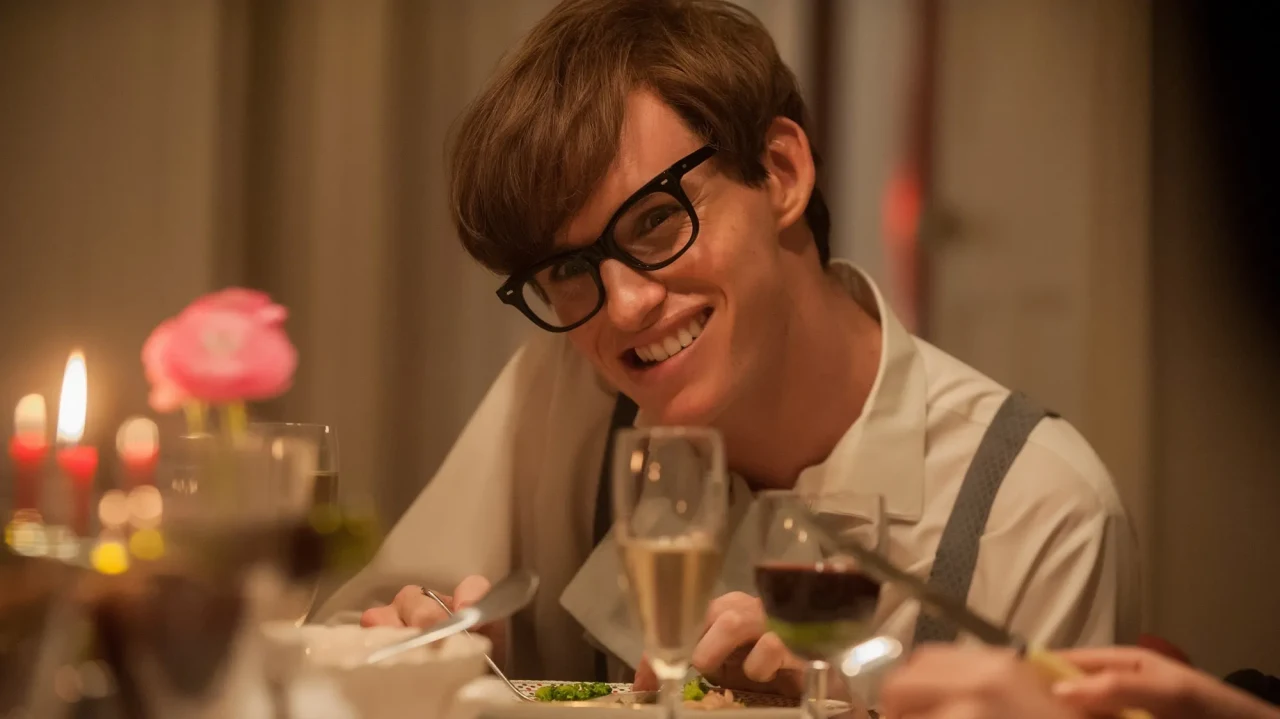
That's what makes the performance more than technical: the intelligence and mischief that stay visible behind the deteriorating body. The eyes keep thinking, and the humor never fully leaves. You believe both the scientist and the man who still wants to flirt, argue, and live.
Felicity Jones has the harder, less showy job, and she is extraordinary at it. Jane is not a saint, but a young woman who makes a romantic, almost reckless choice and then spends decades living inside the consequences.
Jones plays the exhaustion, the resentment, the residual love, and the need for her own life without ever tipping into martyrdom or caricature. When she looks at Stephen, you see both the girl who fell in love with him and the woman who is running out of ways to keep him (and herself) upright.
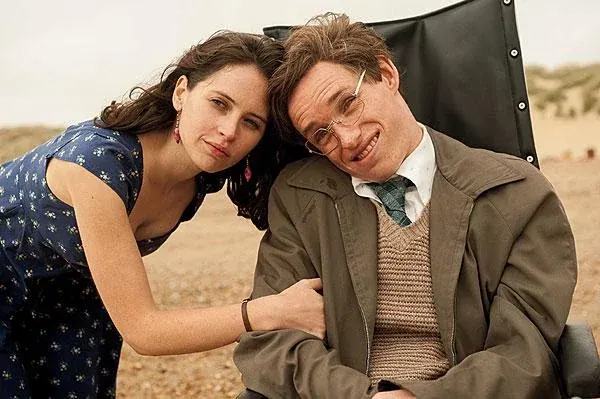
Their chemistry is the film’s real theory of everything that they want to show us. The early courtship scenes have a light, almost screwball energy. The later ones are quieter and heavier. A scene near the end between the two of them lands with such understated force that it feels like the entire movie has been building toward that single, choked exchange.
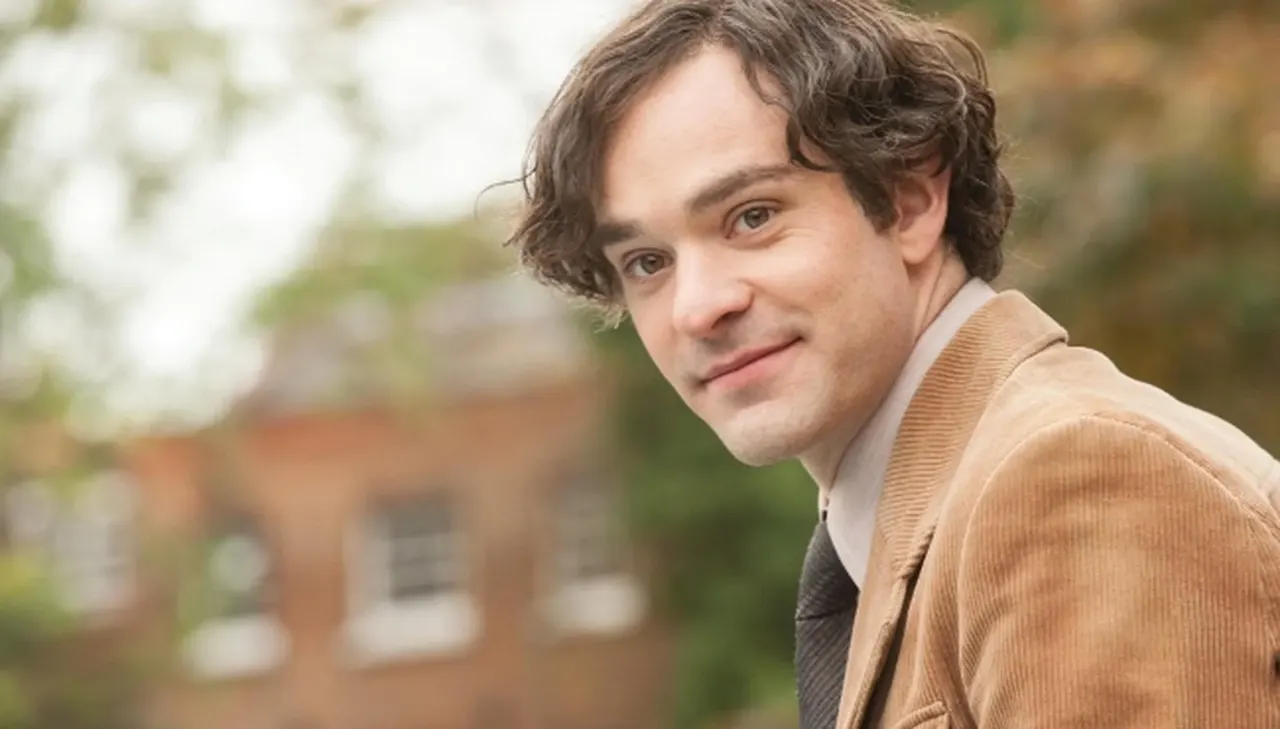
Charlie Cox as Jonathan, the choir director who becomes part of their household, and Maxine Peake as Elaine, the nurse who enters later, give the film its necessary complications without turning into villains. The supporting cast (Emily Watson, Simon McBurney, David Thewlis) fills in the world around the central couple with the right mix of British reserve and quiet care.
Direction, Craft, and the Science That Stays in the Background
James Marsh (coming off the documentary Man on Wire) keeps the camera intimate and the tone controlled. He resists the urge to turn every scientific breakthrough into a swelling montage. The physics is present, which feels like cream swirling in coffee, a conversation under the stars, the visual idea of black holes, but it is never the main event.
The film is more interested in what it costs a human being to keep thinking at that level while the body shuts down. Benoît Delhomme’s cinematography moves from the soft greens and golds of early Cambridge to cooler, more constrained spaces as the disease progresses.
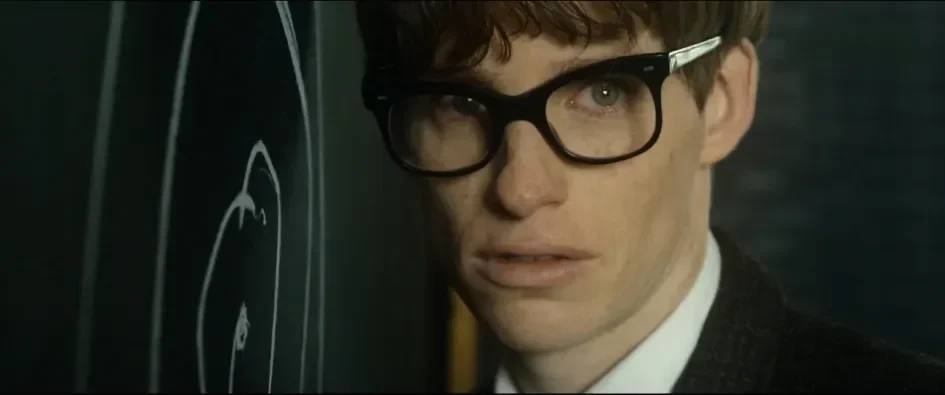
Jóhann Jóhannsson’s score is elegant and restrained; it supports the emotion without drowning it. The makeup and physical work on Redmayne are meticulous without becoming a distraction. You stop noticing the prosthetics and start watching the person inside them.
Where the Film Succeeds and Where It Softens
The Theory of Everything's great strength is its emotional honesty about long-term care and the limits of romantic idealism. The movie understands that love can be real and still not be enough to sustain the daily reality of progressive disability, three children, and a partner whose fame is rising while the caregiver’s identity shrinks.
It gives Jane agency and complexity, which eventually leads the marriage to an end without pretending the love was a lie. The limitations are the ones common to well-made prestige biopics. The science remains mostly atmospheric rather than specific.
Some of the later emotional beats feel slightly smoothed for comfort. The film is more interested in grace notes than in the messier, less photogenic stretches of real life with advanced motor neuron disease. If you come looking for a deep dive into Hawking’s actual scientific arguments, you will leave wanting more.
If you come looking for the human cost of genius and the ordinary heroism of staying, the film delivers.
Who Should Watch This
Watch it if you care about performances that change how an actor is seen. Watch it if you are interested in marriage stories that refuse easy uplift. Watch it if you want a film that treats disability as a lived reality rather than a metaphor or a triumph narrative.
Skip it if you need the science front and center or if you prefer biopics that stay firmly in the “inspiration” lane without the complications.
Redmayne won the Oscar for Best Actor. The film earned nominations for Best Picture, Best Actress, Best Adapted Screenplay, and Best Original Score, plus major BAFTA and Golden Globe recognition. The awards were well earned. The performances are the reason the movie still works more than a decade later.
I'll Rate It 4.5 Out of 5
The Theory of Everything is a love story that understands time the way Hawking did. However, it considers time as something that bends, compresses, and refuses to behave, but not like a straight line. It is tender without being soft, which admires without being worshipful, and honest about the fact that some equations never fully resolve.