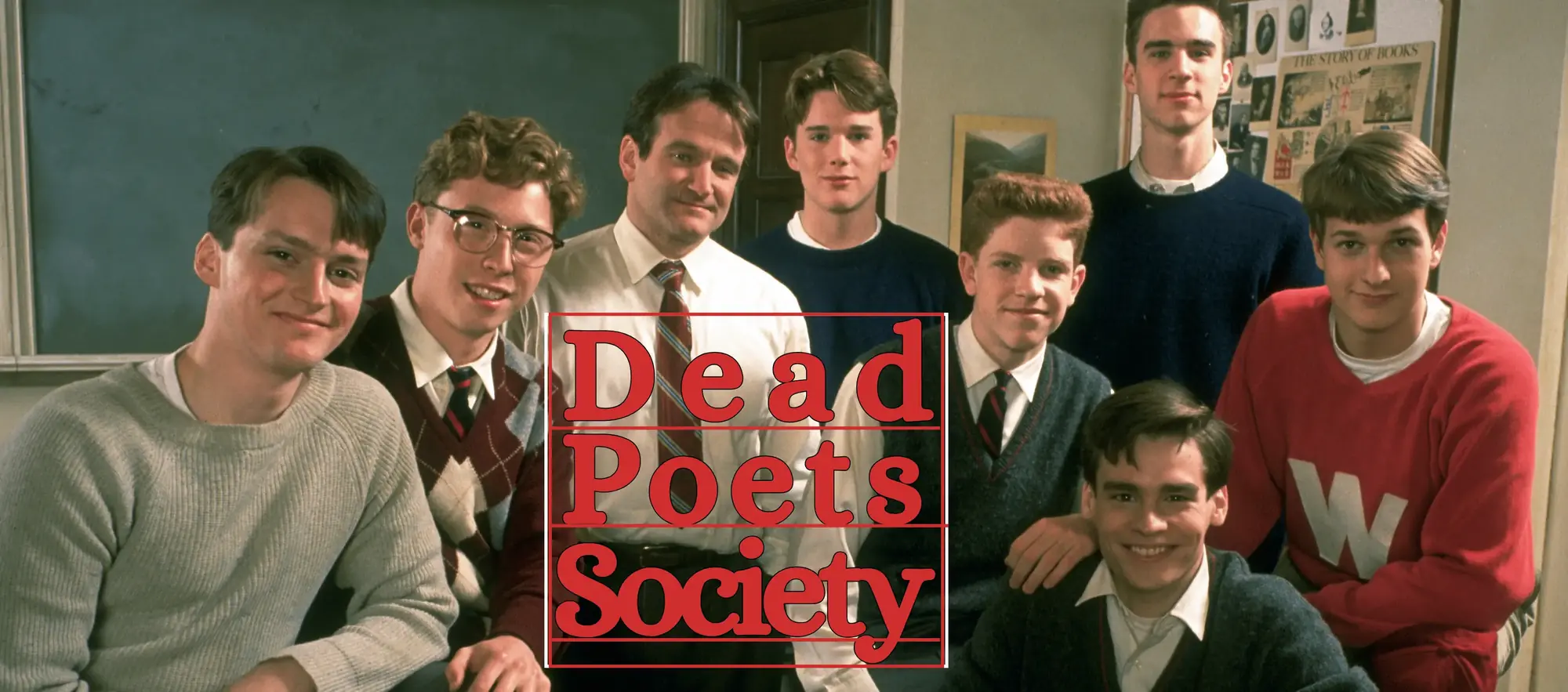
Ages ago, I wasn't a huge fan of movies, but my people used to tell me, "watch Dead Poets Society," and you will love it. And I didn't listen to them at that time.
Later, I familiarized myself with Hollywood movies and kept on watching films that I heard about. Good Will Hunting was one of them, and I watched it, and Robin Williams' performance was marvelous, which ultimately led me to watch "Dead Poets Society" for the first time back in 2022.
Yesterday, I watched it with a friend, and while explaining everything to her, I figured out something worth bragging about. This time, I learned how a teacher can change your life and inspire you to dream bigger.
As I've studied literature, I assumed that this movie was about a society that addresses dead poets in a classroom. But I was wrong, and after watching it for the nth time, here is my honest review of the movie.
What to Know About Dead Poets Society (1989)?
Dead Poets Society was directed by Peter Weir and written by Tom Schulman, who drew on his own school years at Montgomery Bell Academy in Nashville.
It won the Oscar for Best Original Screenplay and was nominated for Best Picture, Best Director, and Best Actor for Robin Williams. There is also a book named Dead Poets Society, which is written by N.H. Kleinbaum and published in 1989.
It was written from an earlier draft of the script, so it includes scenes that never made the final cut. By most accounts, it adds little beyond those scenes, so you can read it for the extras, not for a deeper story.
Storyline of the movie
It's autumn 1959 at Welton Academy, an elite all-boys prep school in Vermont. Shy Todd Anderson arrives for his senior year and is paired with Neil Perry, one of the school's brightest students, whose friends quickly take Todd in.
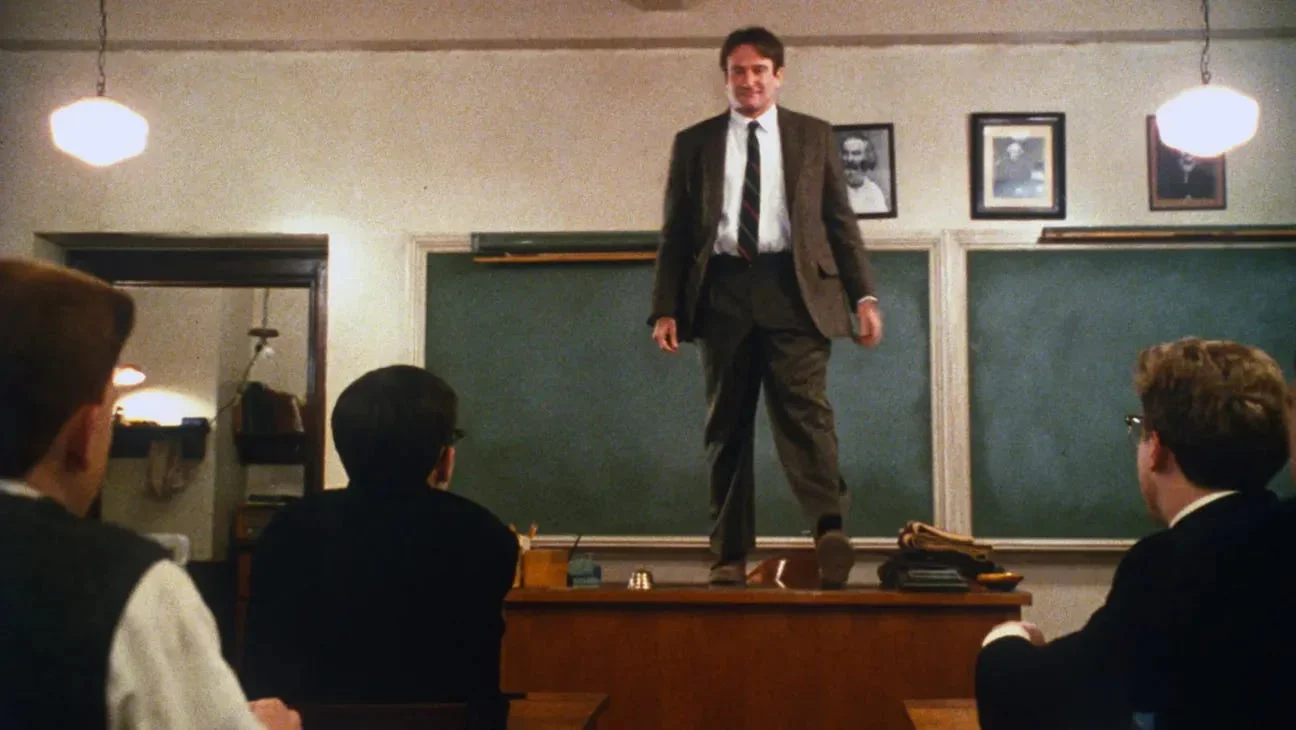
Then comes the new English teacher, John Keating (Robin Williams), a Welton alumnus. On day one, he has the boys rip the introduction out of their poetry textbook, the one that tries to grade poems on a graph.
He stands on his desk to show them that you have to keep looking at the world from a different angle. He tells them they can call him Mr. Keating or, "if you're slightly more daring, O Captain, my Captain."
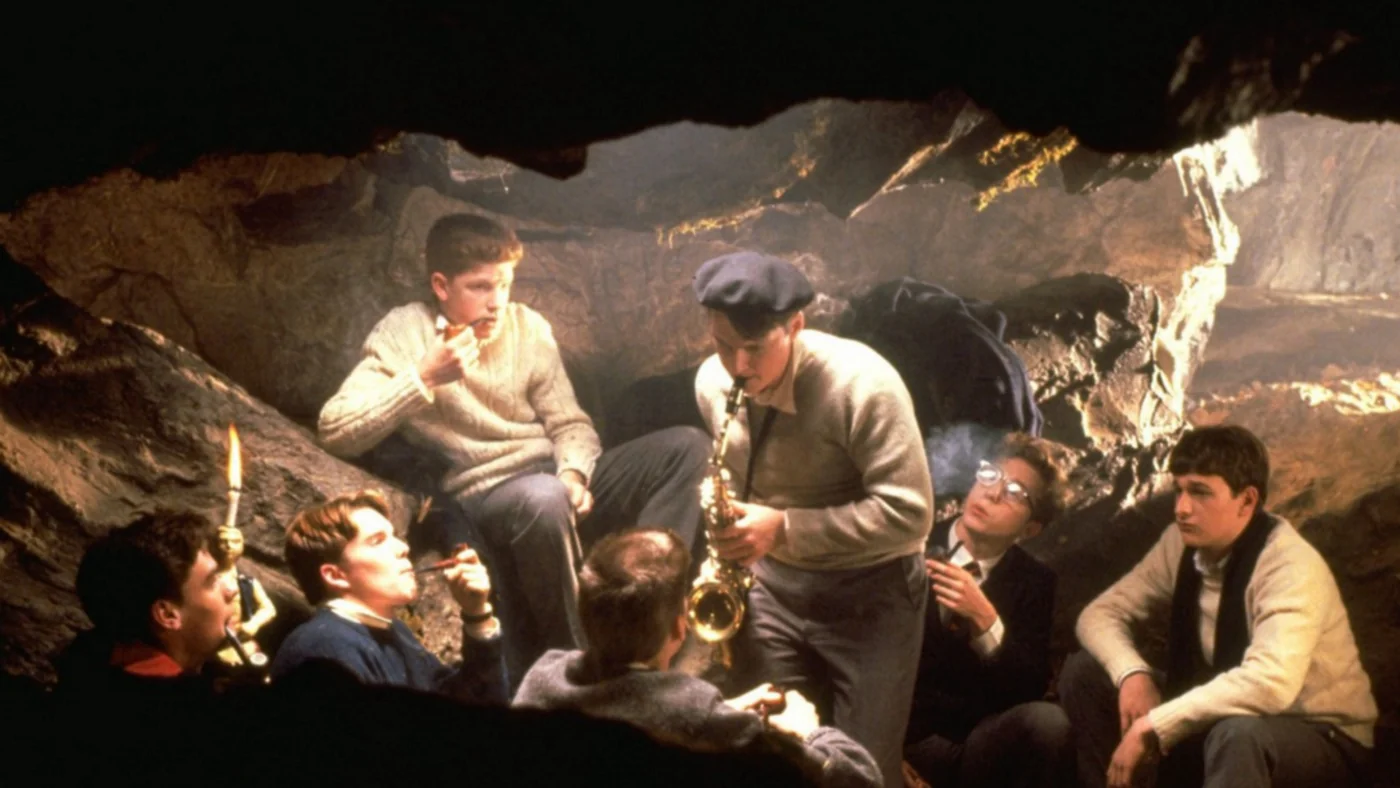
When the boys learn Keating was once part of a secret club called the Dead Poets Society, they revive it. They sneak out at night to a cave to read poetry and write their own.
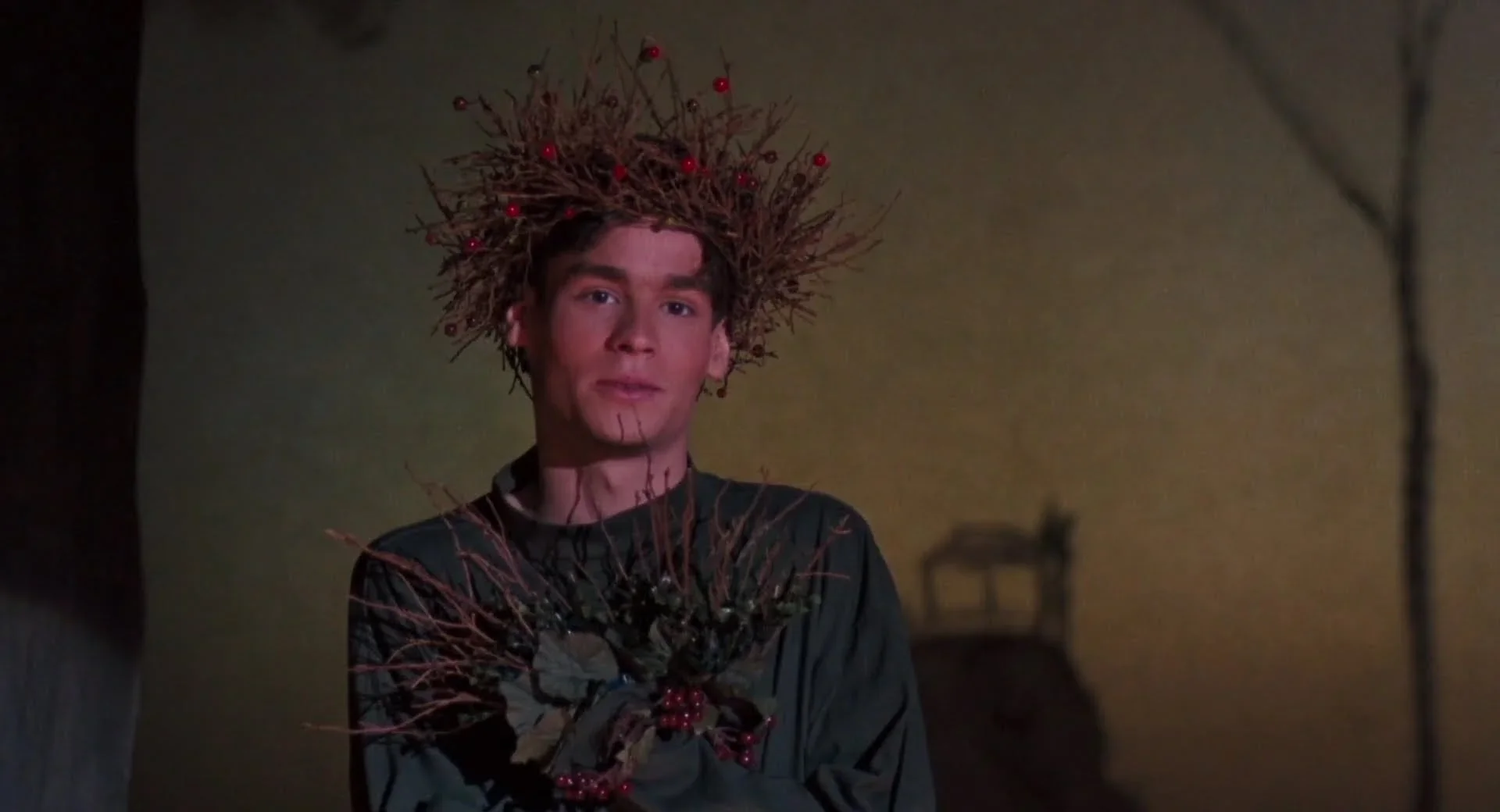
Each of them starts to push back against the life that was planned for him. Neil auditions for a play behind his father's back. Knox chases a girl he isn't supposed to. Todd, who can barely speak in class, finds a voice.
Welton's headmaster, Mr. Nolan, notices, and the film starts to tighten.
A few quick facts
Cast: Robin Williams, Robert Sean Leonard, Ethan Hawke, Josh Charles, Gale Hansen, Dylan Kussman, Norman Lloyd, Kurtwood Smith
Director: Peter Weir
Written by: Tom Schulman
Book: Novelization by N.H. Kleinbaum (1989)
Runtime: 2h 8m
Genre: Drama, Coming-of-age
Filming location: St. Andrew's School, Middletown, Delaware
Rotten Tomatoes: 85% Critics, 92% Audience
IMDb Rating: 8.1/10
What is Dead Poets Society Really About?
The movie seems like a new teacher at a strict boys' school who inspires his students through poetry. However, it's about the gap between the life prepared for you and the one you would choose.
Welton runs on four words: Tradition, Honor, Discipline, Excellence. Mr. Perry has already mapped out Neil's life, from the right school to the right career. Nobody has asked Neil what he wants.
That's what Keating does. He doesn't hand the boys answers. He gives them permission to ask the question. "Carpe diem" gets quoted on posters, but the film is more honest than the poster. Keating also warns the boys to think about consequences, and that's the part people forget.
Poetry here isn't decoration, but it's a way of thinking out loud for the first time. And the most human thing in the film is how dangerous that is for a seventeen-year-old who has never been allowed to want anything.
Dead Poets Society Explained: "O Captain! My Captain!" and the Idea at the Center
To understand the film's most famous moment, you need the poem. Walt Whitman wrote "O Captain! My Captain!" in 1865 after Abraham Lincoln was assassinated.
It's an extended metaphor: the ship is the nation, the captain is Lincoln, and the long voyage is the Civil War. The ship has reached port, and the crowds are cheering, but the speaker is on the deck beside his captain, who has fallen and gone cold. It's victory and grief in the same breath.
One detail I love: Whitman is the poet of free verse, yet this poem is rhymed and metered, almost like a hymn. That's partly why it became so widely loved, and why the grief feels so direct.
Now watch how the film uses it. Early on, "O Captain, my Captain" is a joke, a daring nickname for a favorite teacher. By the end, it's a vow. The two meanings are the point. In the poem, the captain dies, and the ship comes home safe.
In the film, the captain is fired, and the crew has to sail on its own. The prize Whitman's speaker mourns over is exactly what Keating wins: boys who can finally speak for themselves.
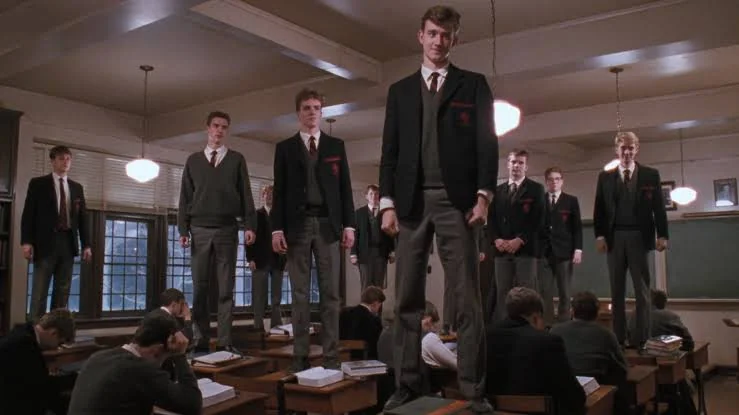
That's the idea at the center of the film. Keating's real lesson isn't "rebel." It's "think for yourself," and the film admits that thinking for yourself has a price, especially when you're young and have no power.
There's one more thing I can't leave out of this explanation. Robin Williams died by suicide on August 11, 2014, at 63. His wife, Susan Schneider Williams, later shared that doctors found Lewy body dementia, which she called "the terrorist inside my husband's brain."
Years earlier, in the 2009 dark comedy World's Greatest Dad, his character says to reach out to someone if you're that depressed, and that suicide is a permanent solution to temporary problems. The line spread everywhere after his death, often described as something he said in an interview.
I understand why people call that ironic. A man who delivered that message died the way he warned against, and he did it after playing a teacher who tries to save boys from despair in a film where one of them dies by suicide. It's a lot to hold.
But I don't think "irony" is quite the right word. It suggests he failed his own advice, as if despair were a lack of conviction, but it isn't. Williams was living with severe depression and, by his wife's account, a brain disease that distorted his thinking. A line in a film isn't a vaccine against an illness.
What the film and his life share is something quieter. In the movie, Neil does reach out to the one adult he trusts and is told to talk to his father.
Dead Poets Society isn't telling us that pain is weakness or that carpe diem fixes everything. It shows that people in pain need to be truly heard before it's too late. Keating listened to the boys with joy. The tragedy is that one conversation went differently.
Ending: What Happens at the Close
When Neil's father learns about the play, he pulls Neil out of it and tells him he'll be sent to military school. That night, Neil dies by suicide.
Welton looks for someone to blame. Under pressure, Cameron names the members of the Dead Poets Society and puts the fault on Keating. The boys are made to sign a statement against their teacher. Keating is dismissed, and Mr. Nolan takes over the English class himself.
In the final scene, Keating returns to collect his things while Nolan is teaching. Todd, the boy who couldn't speak in the first act, stands on his desk and says the words that began as a joke: "O Captain! My Captain!" Others follow, despite Nolan's threats. Keating, moved, thanks them and leaves.
The film ends on a high but uncertain note. Nothing is fixed, and Neil is still gone. But the boys have found their voices, and that's the one thing Welton couldn't take back.
I'll rate this movie 4.6 out of 5
Dead Poets Society isn't perfect. The screenplay is tidy in places, and some speeches are built to be quoted. But the performances keep it honest, and the idea at its center, that you have to be heard before you can become yourself, stays with you long after the credits.